Diffuse Phase
Actions appear scattered across the grid with low connection density. The system records without clustering, allowing space for unstructured observation.
When established routines dissolve, Recovery Mode offers a framework for observing how patterns naturally rebuild — without forcing a return to previous structures.
Recovery Mode is not about restarting from zero. It is an observational state designed for periods when your usual behavioral patterns have been interrupted — by travel, schedule changes, life transitions, or simply the natural ebb of motivation.
During these periods, the visual system shifts: flow lines become softer, clusters more diffuse. This is intentional. The interface mirrors your current behavioral landscape rather than projecting an idealized version of it.
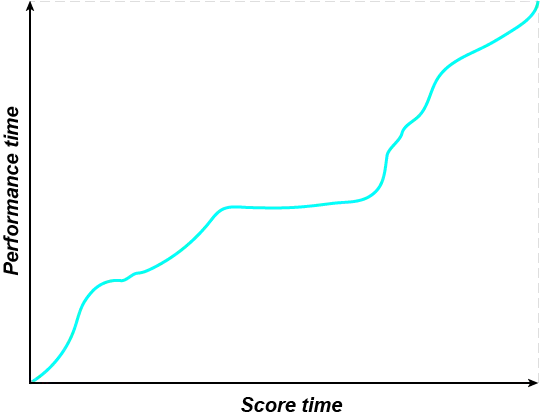
Actions appear scattered across the grid with low connection density. The system records without clustering, allowing space for unstructured observation.
As certain actions repeat, faint lines begin forming between related data points. The system highlights these emerging connections without labeling them as successes.
Stable clusters re-emerge organically. The visual grid sharpens around actions that have found their rhythm again — on your timeline, not a prescribed one.
New patterns may differ from old ones. Recovery Mode helps you see these differences clearly, supporting informed choices about which rhythms to carry forward.
Begin by noting which routines have changed and which have remained. Do not attempt to restore everything simultaneously. Instead, observe which actions reappear first and which require more time.
Recovery Mode respects the nonlinear nature of behavioral change. Some patterns return quickly; others evolve into something new. Both outcomes are valid observations.
The Recovery Mode framework operates on observation, not intervention. You are the analyst of your own patterns; the guide simply provides structure for that analysis.
Use the Routine Comparison Tool to place pre- and post-disruption periods side by side and observe structural differences in your behavioral rhythm.
Open Comparison Tool